By using this site, you agree to the Privacy Policy and Terms of Use.

Accept
African Centre for Media & Information LiteracyAfrican Centre for Media & Information Literacy
Notification Show More
Font ResizerAa
  • Home
  • About AFRICMIL
    • Background
    • Why an African Centre For Media & Information Literacy?
    • Objectives of AFRICMIL
    • Board & Staff
    • Contact Us
  • Programmes and Projects
    • Media & Information Literacy Updates
      • School Media Club/Media in Education
      • Africa Media Literacy Conference
    • Research, Advocacy & Training
      • Gender & Corruption: Women Anti-corruption Initiative (WAI)
      • International Youth Day
      • Video Training Workshop
      • Youth Media Training Workshop
    • MakeYourVotesCount.org
    • Youth Link/Training Manual
      • Youth Link
      • Training Manual
    • Dialogue, Diversity & Development
      • Oral Testimony Project
      • National Youth Media Forum
      • Youth Media Forum/Dialogue Series & Young Reporters Diversity Forum
  • Resources
    • Publications
    • Media and Information Literacy Updates
    • Photo Gallery
    • Press Centre
    • Calender of Events
    • Opportunities
    • Useful Links
  • Partners
  • Video
  • PAMIL
  • UNESCO YOUTH MIL
    • Brief
    • Guidelines
    • Workshop material
    • Programme
    • Participation form
    • MIL University Network of Nigeria
    • Pictures
    • Videos
    • Report of workshop
Font ResizerAa
African Centre for Media & Information LiteracyAfrican Centre for Media & Information Literacy
  • Home
  • About AFRICMIL
  • Programmes and Projects
  • Resources
  • Partners
  • Video
  • PAMIL
  • UNESCO YOUTH MIL
Search
  • Home
  • About AFRICMIL
    • Background
    • Why an African Centre For Media & Information Literacy?
    • Objectives of AFRICMIL
    • Board & Staff
    • Contact Us
  • Programmes and Projects
    • Media & Information Literacy Updates
    • Research, Advocacy & Training
    • MakeYourVotesCount.org
    • Youth Link/Training Manual
    • Dialogue, Diversity & Development
  • Resources
    • Publications
    • Media and Information Literacy Updates
    • Photo Gallery
    • Press Centre
    • Calender of Events
    • Opportunities
    • Useful Links
  • Partners
  • Video
  • PAMIL
  • UNESCO YOUTH MIL
    • Brief
    • Guidelines
    • Workshop material
    • Programme
    • Participation form
    • MIL University Network of Nigeria
    • Pictures
    • Videos
    • Report of workshop
Have an existing account? Sign In
Follow US
News

UNICEF: Make the digital world safer for children – while increasing online access to benefit the most disadvantaged

By AFRICMIL
Published: December 13, 2017
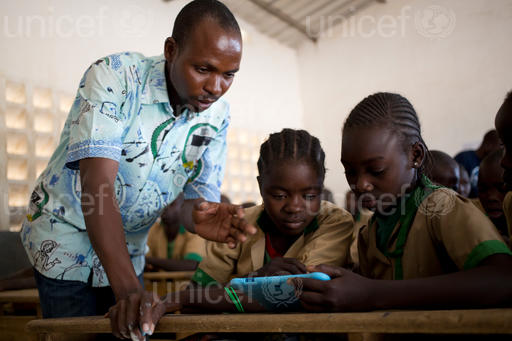
Twelve-year-old Waibai Buka learn with the help of a tablet provided by UNICEF, Tuesday, 31, Oct 2017 in the Baigai school in far Northern Cameroon. Wiabai had to flee her village after an attack from Boko Haram. (UNICEF/K Prinsloo)
SHARE

Flagship report highlights digital divides and explores current debates about the impact of the internet and social media on children’s safety and wellbeing

NEW YORK, 11 December 2017 – Despite children’s massive online presence – 1 in 3 internet users worldwide is a child – too little is done to protect them from the perils of the digital world and to increase their access to safe online content, UNICEF said in its annual flagship report released today.

The State of the World’s Children 2017: Children in a digital world presents UNICEF’s first comprehensive look at the different ways digital technology is affecting children’s lives and life chances, identifying dangers as well as opportunities.  It argues that governments and the private sector have not kept up with the pace of change, exposing children to new risks and harms and leaving millions of the most disadvantaged children behind.

“For better and for worse, digital technology is now an irreversible fact of our lives,” said UNICEF Executive Director Anthony Lake. “In a digital world, our dual challenge is how to mitigate the harms while maximizing the benefits of the internet for every child.”

The report explores the benefits digital technology can offer the most disadvantaged children, including those growing up in poverty or affected by humanitarian emergencies. These include increasing their access to information, building skills for the digital workplace, and giving them a platform to connect and communicate their views.

But the report shows that millions of children are missing out. Around one third of the world’s youth – 346 million – are not online, exacerbating inequities and reducing children’s ability to participate in an increasingly digital economy.

The report also examines how the internet increases children’s vulnerability to risks and harms, including misuse of their private information, access to harmful content, and cyberbullying. The ubiquitous presence of mobile devices, the report notes, has made online access for many children less supervised – and potentially more dangerous.

And digital networks like the Dark Web and cryptocurrencies are enabling the worst forms of exploitation and abuse, including trafficking and ‘made to order’ online child sexual abuse.

The report presents current data and analysis about children’s online usage and the impact of digital technology on children’s wellbeing, exploring growing debates about digital “addiction” and the possible effect of screen time on brain development.

Additional facts from the report include:

  • Young people are the most connected age group. Worldwide, 71 per cent are online compared with 48 per cent of the total population.
  • African youth are the least connected, with around 3 out of 5 youth offline, compared to just 1 in 25 in Europe.
  • Approximately 56 per cent of all websites are in English and many children cannot find content they understand or that is culturally relevant.
  • More than 9 in 10 child sexual abuse URLs identified globally are hosted in five countries – Canada, France, the Netherlands, the Russian Federation and the United States.

Only collective action – by governments, the private sector, children’s organizations, academia, families and children themselves – can help level the digital playing field and make the internet safer and more accessible for children, the report says.

Practical recommendations to help guide more effective policymaking and more responsible business practices to benefit children include:

  • Provide all children with affordable access to high-quality online resources.
  • Protect children from harm online – including abuse, exploitation, trafficking, cyberbullying and exposure to unsuitable materials.
  • Safeguard children’s privacy and identities online.
  • Teach digital literacy to keep children informed, engaged and safe online.
  • Leverage the power of the private sector to advance ethical standards and practices that protect and benefit children online.
  • Put children at the centre of digital policy.

“The internet was designed for adults, but it is increasingly used by children and young people – and digital technology increasingly affects their lives and futures. So digital policies, practices, and products should better reflect children’s needs, children’s perspectives and children’s voices,” said Lake.

##### 

About UNICEF

UNICEF works in some of the world’s toughest places, to reach the world’s most disadvantaged children. Across 190 countries and territories, we work for every child, everywhere, to build a better world for everyone. For more information about UNICEF and its work for children visit www.unicef.org. Follow UNICEF on Twitter and Facebook 

For more information, please contact:
Georgina Thompson, UNICEF New York, Tel: +1 917 238 1559, gthompson@unicef.org

Ebonyi State Chapter Pioneers Double Package ACSPN History Series in South East Zone on April 27
ACSPN 2022 Conference and AGM: Registration Commences
GAPMIL’s statement on the occasion of the International Youth Day, 2014
Call for nominations: UNESCO-supported GAPMIL Global Media and Information Literacy Awards 2019
Gov. Seriake Dickson to speak on restructuring Nigeria at public presentation of We Are All Biafrans
Leave a Comment

Leave a Reply

Your email address will not be published. Required fields are marked *

AFRICMIL FACEBOOK PAGE

AFRICMIL FACEBOOK PAGE

TOP NAVIGATIONS LIST

  • Home
  • About AFRICMIL
    • Background
    • Why an African Centre For Media & Information Literacy?
    • Objectives of AFRICMIL
    • Board & Staff
    • Contact Us
  • Programmes and Projects
    • Media & Information Literacy Updates
      • School Media Club/Media in Education
      • Africa Media Literacy Conference
    • Research, Advocacy & Training
      • Gender & Corruption: Women Anti-corruption Initiative (WAI)
      • International Youth Day
      • Video Training Workshop
      • Youth Media Training Workshop
    • MakeYourVotesCount.org
    • Youth Link/Training Manual
      • Youth Link
      • Training Manual
    • Dialogue, Diversity & Development
      • Oral Testimony Project
      • National Youth Media Forum
      • Youth Media Forum/Dialogue Series & Young Reporters Diversity Forum
  • Resources
    • Publications
    • Media and Information Literacy Updates
    • Photo Gallery
    • Press Centre
    • Calender of Events
    • Opportunities
    • Useful Links
  • Partners
  • Video
  • PAMIL
  • UNESCO YOUTH MIL
    • Brief
    • Guidelines
    • Workshop material
    • Programme
    • Participation form
    • MIL University Network of Nigeria
    • Pictures
    • Videos
    • Report of workshop

5th National Conference

IMG_2666
IMG_2727
IMG_2736
IMG_2701
Copyright © 2006–2025 AFricmil Inc. All rights reserved.
  • Home
  • Press Release
  • News
  • Events
  • About AFRICMIL
  • UNESCO Youth MIL
  • Disclaimer
  • Contact Us
  • Privacy Policy
  • Terms & Conditions
Welcome Back!

Sign in to your account

Username or Email Address
Password

Lost your password?